Thursday, July 28, 2011
Off the subject
So this has absolutely nothing to do with music . . . but it did crack me up. Her name is Hannah Hart and she's hysterical. Enjoy!


Monday, July 25, 2011
Painted Violins
Here's something I've never considered as an alternative fundraiser idea: auctioning off painted violins. Apparently its been done quite a bit by orchestras and schools, with some fascinating results. Probably the best of the lot can be found at the Chicago Symphony Orchestra's website, which is where I found these:


Winifred Godfrey, "Fleur de Lis"

Paul Sierra, "Concerto for Nature"

John Himmelfarb, "Double Cadenza"

Alexandru Darida, "Rhapsody"

Some other links, if you're curious:
The Denver Young Artists Orchestra have been doing it for years, 2005, 2006, 2007, 2009 and this one
Individual Artists
Tuesday, July 19, 2011

Monday, July 18, 2011
Repost from Musicianwages.com
Necessary reading for people interested in army gigs:
Top Ten People Who Should Definitely NOT Join the Army Band
This is the season of chilled beer and barbecued hot dogs, where grown men lounge in kiddie pools while small children launch bottle rockets at each other. Freedom and apple pie scent the air, while the Stars and Stripes fly proudly over many a green lawn. Hearts burst with pride over all things American, and people flock down to the local recruiter’s office hoping to meet Uncle Sam himself. In this spirit of patriotism, brotherhood, buffalo wings and “The Wal-Mart” I bring to you:
“Josh’s Super Deluxe All-American Top Ten List of People Who Should Definitely NOT Join the Army Band”
When I volunteered to write for MusicianWages.com I had one goal. To help interested folks make an informed decision before enlisting. Part of that goal involves steering away people who would not fit, and would make themselves (and everyone around them) miserable, by joining. This list is dedicated to you.
Etc Etc Etc . . .
Top Ten People Who Should Definitely NOT Join the Army Band
This is the season of chilled beer and barbecued hot dogs, where grown men lounge in kiddie pools while small children launch bottle rockets at each other. Freedom and apple pie scent the air, while the Stars and Stripes fly proudly over many a green lawn. Hearts burst with pride over all things American, and people flock down to the local recruiter’s office hoping to meet Uncle Sam himself. In this spirit of patriotism, brotherhood, buffalo wings and “The Wal-Mart” I bring to you:
“Josh’s Super Deluxe All-American Top Ten List of People Who Should Definitely NOT Join the Army Band”
When I volunteered to write for MusicianWages.com I had one goal. To help interested folks make an informed decision before enlisting. Part of that goal involves steering away people who would not fit, and would make themselves (and everyone around them) miserable, by joining. This list is dedicated to you.
Etc Etc Etc . . .
Tuesday, July 12, 2011
Music Directing Online Book
Hey, someone's written a book on music directing! Here's a great online resource for music directors from a man of many talents, Armando Fox:
"So They Talked You Into Being Music Director ( A Cheat Sheet, Survival Guide, and Tales From the Pit)"
Contents
0.1 About the Author
1 Who This Book Is For
1.1 Map of This Book
I Pre-Production
2 Planning And Logistics
2.1 What’s In The Box
2.2 The Conductor’s Score
2.3 Instrumentation: Types of Ensembles
2.4 Instrumentation on a Shoestring
2.5 Electronic Instruments
2.6 Scheduling and Timeline
3 Auditions
3.1 Provide Instructions to Auditioners
3.2 First Round Auditions: Range, Tone, Pitch Retention, Rhythm
3.3 Making Callback Choices
3.4 Tips to Auditioners for a Successful Audition
II Working With Actors and Singers
4 Teaching the Music
4.1 Scheduling and Running Vocal Rehearsals
4.2 Practice Tracks For At-Home Preparation
4.3 Pitch and Interval Training
4.4 Passing/Neighbor Tones vs. the Long Line
4.5 Variable-Stress Practice
4.6 No Obvious Starting Pitch
4.7 Teaching Harmonies and Counterpoint
4.8 Tricky Rhythms
4.9 Tips for Running Successful Vocal Rehearsals
4.10 Summary and Checklist
5 Diction
5.1 Diction Basics
5.2 Vowels and Consonants
5.3 Diction and Rhythm
5.4 Tempo
5.5 Dynamics
5.6 Polishing Away Easily-Avoided Pitfalls
5.7 Microphones: A Blessing and a Curse
5.8 Summary and Checklists
6 Performing the Material
6.1 Putting the Show in Context
6.2 Getting Inside A Song
6.3 Example: So What (Cabaret)
6.4 Example: Dulcinea (Man Of La Mancha)
III Working With the Orchestra
7 A Tour of the Orchestra Materials
7.1 The Conductor or Piano/Conductor Score
7.1.1 Common Musical Notations
7.1.2 Script Cues
7.1.3 Common Structural Notations
7.1.4 Underscoring
7.1.5 Segues
7.2 The Instrument Books
7.2.1 Doubling
7.2.2 Cross-Cuing
8 Working With the Orchestra
8.1 Orchestra Recruiting
8.2 The Mighty Piano
8.3 Strings
8.4 Preparing for Orchestra Rehearsal
8.4.1 Orchestra Rehearsal Venues
8.4.2 Preparing the Book
8.4.3 Mark Up the Book
8.4.4 Practice the Cues During Regular Rehearsals
8.5 Running the Play-Through
8.5.1 Budget 30 Extra Minutes
8.5.2 Polishing
8.6 Sitzprobe or Sit-n-Sing
8.7 Tech Week
8.8 Subs
9 Conducting
9.1 Conducting 101 for Pit Conductors
9.1.1 Rules of Thumb
9.1.2 Hands-Free Conducting
9.2 Theater Conducting Situations
9.2.1 Warning and Start
9.2.2 Tempo Changes
9.2.3 Dictated Notes and Colla Voce
9.2.4 Exiting Vamps
9.2.5 Underscoring
9.2.6 Safeties
9.2.7 Starts and Stops
10 On-the-Spot Arranging
10.1 Part Consolidation
10.2 Doing Your Own Reduction
10.2.1 Who Can Be Recruited?
10.3 Score Analysis
10.3.1 Rhythmic Foundation
10.3.2 Melody Lines
10.3.3 Counterpoint Lines
10.3.4 Embellishments
10.3.5 Obbligato Lines
10.3.6 “Signature Sound”
10.4 Reduction Strategies and Examples
10.4.1 Rules of Thumb and General Principles
10.4.2 Duplication and Substitution
10.5 Example Strategies
10.5.1 Sondheim’s Assassins
10.5.2 Man of La Mancha
10.6 Transposition
IV Appendices: Other Useful Stuff
11 Technology
11.1 The Internet
11.2 Scanning
11.3 Online Documents
11.4 Recording Practice Tracks
11.5 Music Notation, Transposition, Arranging
Glossary
"So They Talked You Into Being Music Director ( A Cheat Sheet, Survival Guide, and Tales From the Pit)"
Contents
0.1 About the Author
1 Who This Book Is For
1.1 Map of This Book
I Pre-Production
2 Planning And Logistics
2.1 What’s In The Box
2.2 The Conductor’s Score
2.3 Instrumentation: Types of Ensembles
2.4 Instrumentation on a Shoestring
2.5 Electronic Instruments
2.6 Scheduling and Timeline
3 Auditions
3.1 Provide Instructions to Auditioners
3.2 First Round Auditions: Range, Tone, Pitch Retention, Rhythm
3.3 Making Callback Choices
3.4 Tips to Auditioners for a Successful Audition
II Working With Actors and Singers
4 Teaching the Music
4.1 Scheduling and Running Vocal Rehearsals
4.2 Practice Tracks For At-Home Preparation
4.3 Pitch and Interval Training
4.4 Passing/Neighbor Tones vs. the Long Line
4.5 Variable-Stress Practice
4.6 No Obvious Starting Pitch
4.7 Teaching Harmonies and Counterpoint
4.8 Tricky Rhythms
4.9 Tips for Running Successful Vocal Rehearsals
4.10 Summary and Checklist
5 Diction
5.1 Diction Basics
5.2 Vowels and Consonants
5.3 Diction and Rhythm
5.4 Tempo
5.5 Dynamics
5.6 Polishing Away Easily-Avoided Pitfalls
5.7 Microphones: A Blessing and a Curse
5.8 Summary and Checklists
6 Performing the Material
6.1 Putting the Show in Context
6.2 Getting Inside A Song
6.3 Example: So What (Cabaret)
6.4 Example: Dulcinea (Man Of La Mancha)
III Working With the Orchestra
7 A Tour of the Orchestra Materials
7.1 The Conductor or Piano/Conductor Score
7.1.1 Common Musical Notations
7.1.2 Script Cues
7.1.3 Common Structural Notations
7.1.4 Underscoring
7.1.5 Segues
7.2 The Instrument Books
7.2.1 Doubling
7.2.2 Cross-Cuing
8 Working With the Orchestra
8.1 Orchestra Recruiting
8.2 The Mighty Piano
8.3 Strings
8.4 Preparing for Orchestra Rehearsal
8.4.1 Orchestra Rehearsal Venues
8.4.2 Preparing the Book
8.4.3 Mark Up the Book
8.4.4 Practice the Cues During Regular Rehearsals
8.5 Running the Play-Through
8.5.1 Budget 30 Extra Minutes
8.5.2 Polishing
8.6 Sitzprobe or Sit-n-Sing
8.7 Tech Week
8.8 Subs
9 Conducting
9.1 Conducting 101 for Pit Conductors
9.1.1 Rules of Thumb
9.1.2 Hands-Free Conducting
9.2 Theater Conducting Situations
9.2.1 Warning and Start
9.2.2 Tempo Changes
9.2.3 Dictated Notes and Colla Voce
9.2.4 Exiting Vamps
9.2.5 Underscoring
9.2.6 Safeties
9.2.7 Starts and Stops
10 On-the-Spot Arranging
10.1 Part Consolidation
10.2 Doing Your Own Reduction
10.2.1 Who Can Be Recruited?
10.3 Score Analysis
10.3.1 Rhythmic Foundation
10.3.2 Melody Lines
10.3.3 Counterpoint Lines
10.3.4 Embellishments
10.3.5 Obbligato Lines
10.3.6 “Signature Sound”
10.4 Reduction Strategies and Examples
10.4.1 Rules of Thumb and General Principles
10.4.2 Duplication and Substitution
10.5 Example Strategies
10.5.1 Sondheim’s Assassins
10.5.2 Man of La Mancha
10.6 Transposition
IV Appendices: Other Useful Stuff
11 Technology
11.1 The Internet
11.2 Scanning
11.3 Online Documents
11.4 Recording Practice Tracks
11.5 Music Notation, Transposition, Arranging
Glossary
Monday, July 11, 2011
A Brief Guide to Page Turners, Updated
Here is an updated list, built upon a previous post, of the most common kinds of page turners with corresponding identifiers for easy reference. Thank you to all who have contributed, again everyone feel free to add on.
Crowders sit unnecessarily close at all times (sometimes practically in your lap).
Danglers are those who wear cardigan sweaters, unclipped ties, lanyards, scarves, or other annoyingly fringed items while turning pages. These items create a constant distraction throughout a performance, often grazing the performer’s left arm with every page turn.
Destroyers turn with enough force to rip music or fling scores to the ground.
Elephants in the Room are obviously last-minute recruits, mainly identifiable by inappropriate clothing such as jeans and t-shirts. They occasionally wear all-black with white socks.
Hand Position Observers have been known to put off many a pianist in performance with their single-minded focus on the hand, wrist, and forearm position of the pianist whose pages they are supposed to be turning. These unusually dedicated students of piano pedagogy also tend to carry protractors backstage.
Heart Attacks turn the pages too soon or too late (sometimes two at a time . . .) They incite panic and frantic slapping of pages.
Helicopters hover with a hand on the music, regardless of incredibly slow tempos or flat-laying scores.
Human Obstacles attempt to turn from the bottom RH side of the music, blocking the view and inspiring thoughts of violence.
Music Civilians are mystified by the black and white dots scattered on the page and find what you do closely akin to magic. They are usually terrified of making a mistake and stare at you, unblinking and tense, for each nod. Oddly enough, they are one of your better options.
Participators will read the text of the singers and/or hum along with the melodies during performances.
Silent Critics are usually pianists of equal or higher chops. They're great at turning, but unfortunately also cause acute self-consciousness with every wrong note and bad fingering.
Songbird Heart Attacks are singers who are recruited as page-turners. They inevitably wait until the last word on the page has been sung, regardless of the difficulty of the accompaniment, how many times or how vigorously the performer nods, and the myriad of other small signs they send (throat-clearing, a nudge with the left knee, etc.) that it is beyond time to turn the frickin' page. In addition to inciting panic and frantic slapping of pages, they invoke very strong urges towards homicide.
Space Cadets are either caught up within the music or contemplating what to have for lunch as you turn your own pages. They may also forget to show up to the concert at all.
Terrifyingly Clueless tend to ask questions like, "Which side should I sit on?"
Totally Screwed turners are those faced with unattached Xerox copies, pocket scores, unfortunate spotlight placements, random air-conditioning mishaps and other situations which cause a formerly competent turner to be blinded, confused and utterly useless.
Two-Second Delay turners get up exactly two measures later than you are comfortable with, and turn two measures later than you'd like. They get the job done, but ultimately it feels like you barely made it through the recital. It helps to think, "Hey, it could be worse."
Walking Wounded are traumatized page turners who get lost in scores with extensive cuts, additions and revisions. If they turn the page too early and the pianist whips the page back, they cower in fear and humiliation, hindering any ability to be useful for the rest of the recital. Unfortunately, this is usually a close friend, resulting in tearful explanations or angry confrontations over difficulty of the score. A reconciliatory drink is recommended.
We applaud the:
Crouching Tiger, Hidden Page-Turners are the ninjas among page turners, and sit completely out of one's peripheral vision. They rise with smooth motions approximately 1-2 lines from the bottom (depending upon tempo), turn the page lightening-quick and retreat back to invisibility without a whisper of sound. Their non-presence allows you to focus on the performance instead of on enabling someone to allow you to perform music.
Just for fun, here is A Page Turner’s Bio:
(The following program notes are found randomly on the internet and are from an unidentified piano recital.)
Tonight's page turner, Ruth Spelke, studied under Ivan Schmertnick at the Boris Nitsky School of Page Turning in Philadelphia. She has been turning pages here and abroad for many years for some of the world's leading pianists.
In 1988, Ms. Spelke won the Wilson Page Turning Scholarship, which sent her to Israel to study page turning from left to right. She is winner of the 1984 Rimsky Korsakov Flight of the Bumblebee Prestissimo Medal, having turned 47 pages in an unprecedented 32 seconds. She was also a 1983 silver medalist at the Klutz Musical Page Pickup Competition: contestants retrieve and rearrange a musical score dropped from a Yamaha. Ms. Spelke excelled in "grace, swiftness, and especially poise."
For techniques, Ms. Spelke performs both the finger-licking and the bent-page corner methods. She works from a standard left bench position, and is the originator of the dipped-elbow page snatch, a style used to avoid obscuring the pianist's view of the music. She is page turner in residence in Fairfield Iowa, where she occupies the coveted Alfred Hitchcock Chair at the Fairfield Page Turning Institute.
Ms. Spelke is married, and has a nice house on a lake.
And, an Amusing Infographic by ToneDeaf:

Crowders sit unnecessarily close at all times (sometimes practically in your lap).
Danglers are those who wear cardigan sweaters, unclipped ties, lanyards, scarves, or other annoyingly fringed items while turning pages. These items create a constant distraction throughout a performance, often grazing the performer’s left arm with every page turn.
Destroyers turn with enough force to rip music or fling scores to the ground.
Elephants in the Room are obviously last-minute recruits, mainly identifiable by inappropriate clothing such as jeans and t-shirts. They occasionally wear all-black with white socks.
Hand Position Observers have been known to put off many a pianist in performance with their single-minded focus on the hand, wrist, and forearm position of the pianist whose pages they are supposed to be turning. These unusually dedicated students of piano pedagogy also tend to carry protractors backstage.
Heart Attacks turn the pages too soon or too late (sometimes two at a time . . .) They incite panic and frantic slapping of pages.
Helicopters hover with a hand on the music, regardless of incredibly slow tempos or flat-laying scores.
Human Obstacles attempt to turn from the bottom RH side of the music, blocking the view and inspiring thoughts of violence.
Music Civilians are mystified by the black and white dots scattered on the page and find what you do closely akin to magic. They are usually terrified of making a mistake and stare at you, unblinking and tense, for each nod. Oddly enough, they are one of your better options.
Participators will read the text of the singers and/or hum along with the melodies during performances.
Silent Critics are usually pianists of equal or higher chops. They're great at turning, but unfortunately also cause acute self-consciousness with every wrong note and bad fingering.
Songbird Heart Attacks are singers who are recruited as page-turners. They inevitably wait until the last word on the page has been sung, regardless of the difficulty of the accompaniment, how many times or how vigorously the performer nods, and the myriad of other small signs they send (throat-clearing, a nudge with the left knee, etc.) that it is beyond time to turn the frickin' page. In addition to inciting panic and frantic slapping of pages, they invoke very strong urges towards homicide.
Space Cadets are either caught up within the music or contemplating what to have for lunch as you turn your own pages. They may also forget to show up to the concert at all.
Terrifyingly Clueless tend to ask questions like, "Which side should I sit on?"
Totally Screwed turners are those faced with unattached Xerox copies, pocket scores, unfortunate spotlight placements, random air-conditioning mishaps and other situations which cause a formerly competent turner to be blinded, confused and utterly useless.
Two-Second Delay turners get up exactly two measures later than you are comfortable with, and turn two measures later than you'd like. They get the job done, but ultimately it feels like you barely made it through the recital. It helps to think, "Hey, it could be worse."
Walking Wounded are traumatized page turners who get lost in scores with extensive cuts, additions and revisions. If they turn the page too early and the pianist whips the page back, they cower in fear and humiliation, hindering any ability to be useful for the rest of the recital. Unfortunately, this is usually a close friend, resulting in tearful explanations or angry confrontations over difficulty of the score. A reconciliatory drink is recommended.
We applaud the:
Crouching Tiger, Hidden Page-Turners are the ninjas among page turners, and sit completely out of one's peripheral vision. They rise with smooth motions approximately 1-2 lines from the bottom (depending upon tempo), turn the page lightening-quick and retreat back to invisibility without a whisper of sound. Their non-presence allows you to focus on the performance instead of on enabling someone to allow you to perform music.
Just for fun, here is A Page Turner’s Bio:
(The following program notes are found randomly on the internet and are from an unidentified piano recital.)
Tonight's page turner, Ruth Spelke, studied under Ivan Schmertnick at the Boris Nitsky School of Page Turning in Philadelphia. She has been turning pages here and abroad for many years for some of the world's leading pianists.
In 1988, Ms. Spelke won the Wilson Page Turning Scholarship, which sent her to Israel to study page turning from left to right. She is winner of the 1984 Rimsky Korsakov Flight of the Bumblebee Prestissimo Medal, having turned 47 pages in an unprecedented 32 seconds. She was also a 1983 silver medalist at the Klutz Musical Page Pickup Competition: contestants retrieve and rearrange a musical score dropped from a Yamaha. Ms. Spelke excelled in "grace, swiftness, and especially poise."
For techniques, Ms. Spelke performs both the finger-licking and the bent-page corner methods. She works from a standard left bench position, and is the originator of the dipped-elbow page snatch, a style used to avoid obscuring the pianist's view of the music. She is page turner in residence in Fairfield Iowa, where she occupies the coveted Alfred Hitchcock Chair at the Fairfield Page Turning Institute.
Ms. Spelke is married, and has a nice house on a lake.
And, an Amusing Infographic by ToneDeaf:

Thursday, July 7, 2011
The Little Things
Ever have a song put in front of you that you know - and you know you can play it beautifully except for two measures? There are a few songs that for some reason my brain always freezes at a certain point and I need to go over it again (slowly, a couple of times) before I can execute them with confidence.
The tunes that leap to mind:
Duke's 'Loveliest of Trees' - at one point in undergrad I had the transition memorized, practically. These days, not so much.


I love this section of Chanson Triste, but I hate sightreading it.
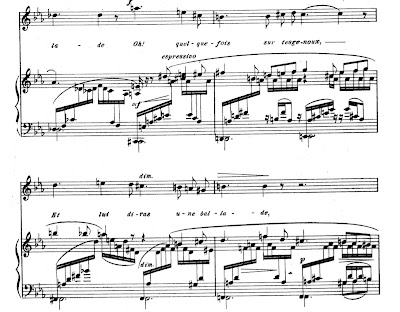
With Quilter's Love's Philosophy I'm fine until I get to the end. That's where my LH shrugs at me:

I'd love to hear thoughts on other tunes that people find blink-worthy in a sightreading situation. Feel free to add on ideas.
The tunes that leap to mind:
Duke's 'Loveliest of Trees' - at one point in undergrad I had the transition memorized, practically. These days, not so much.

Strauss's Zueignung - you know the section.

I love this section of Chanson Triste, but I hate sightreading it.

With Quilter's Love's Philosophy I'm fine until I get to the end. That's where my LH shrugs at me:

I'd love to hear thoughts on other tunes that people find blink-worthy in a sightreading situation. Feel free to add on ideas.
Friday, July 1, 2011
Happy Belated Birthday!
So I realized I started this blog exactly two years and one month ago - happy birthday to Good Company!
Thursday, June 30, 2011


Repost: We're Halfway There
A Tom Greeves post that made me smile . . .
"Tommy used to work on the docks
Union's been on strike
He's down on his luck
It's tough
So tough
Tommy reflects that
Maybe collective bargaining
Isn't all it's cracked up to be
The well-fed bosses
Of his so-called union
Earn white-collar salaries
But thanks to them
Tommy and his mates
Never seem to have any work
Gina works the diner all day
Whilst the basic salary isn't great
A combination of overtime shifts
And generous tips from customers
Who appreciate good service
Amounts to a pretty decent income
Inspired by Gina
Tommy decides he's fed up with
Being a docker
And becomes a cab driver
He enjoys being his own boss
And not being at the mercy of workshy colleagues
And because he can set his own hours
He has plenty of time
To pursue his passion for music
(And his customers provide lots of material for songs!!!)
Tommy and Gina's relationship
Has never been stronger
And each of them feels
Much more fulfilled on
An individual level too"
Monday, June 27, 2011
New Archive
I've assembled an archive page for the entire blog - you can find it on the tab above the blog entries, or you can use this link here:
Archive by Subject
I hope you find this helpful!
Archive by Subject
I hope you find this helpful!
Sunday, June 26, 2011
Happy Sunday
One and all. Here's a Natalie Dee for you.


P.S. - Me posting this is a perfect example of what happens when a musician-gone-nocturnal (going to bed @ 5am, getting up at 12pm) has to get up at 6:30 on a Sunday morning. Its not pretty . . .
Saturday, June 25, 2011
Spring Awakening Research, Part II
Spring Awakening Lead Characters:
Wendla – Soprano. Innocent, but with every passing day, she grows more curious about the world around her. Both vulnerable and a willing participant in her evolution.
Melchior - Baritone. A smart, headstrong boy who refuses to bow down to society's rules. An atheist. Struggles with his intense feelings for Wendla.
Moritz - Tenor. A troubled student who desperately tries to please his father, but always seems to disappoint him. Melchior's best friend.
Supporting Characters:
Georg – Tenor (MTI says The bulk of his range is between Ab2 - A4, and he needs to be able to sing up to an D5 in falsetto). A schoolmate of Melchoir's who is overcome with his feelings for his piano teacher.
Otto - Tenor (MTI says 'baritenor'). A schoolmate who dreamt of his mother, as Melchior humorously reveals to Moritz in an effort to help him relax.
Hanschen - Tenor (MTI says 'baritenor'). A schoolmate of Melchior's who is comfortable with being gay and uses his looks and intelligence to manipulate Ernst.
Ernst - Tenor. (MTI says 'baritenor') A naive classmate of the boys who falls deeply for Hanschen's seduction.
Martha - Alto.
Ilse – Mezzo. Martha's sister, who shares her dark secret and has run away from home to live in an artists' colony.
Anna – Alto.
Thea - Mezzo. Wendla's best friend. A schoolgirl who tries to stay innocent and pure.
And several adults (spoken only)
*Middle C = C4
And several adults (spoken only)
*Middle C = C4
Songlist, Characters and Ranges
1. Mama Who Bore Me -- Wendla: G3-A4
2. Mama Who Bore Me (Reprise) -- Anna: B3-C5, Martha: A3-E5, Thea: A3-E5, Wendla: E4-E5, Ilse: E4-E5,
3. All That's Known -- Melchior: C3-E4
Wednesday, June 15, 2011
Subscribe to:
Posts (Atom)